

The Last Meter: Why Physical Cabling Matters More Than Ever in the Age of IP Audio
Network audio has changed the architecture of professional sound systems profoundly. Signal can travel hundreds of metres across an IP network with negligible loss, managed through software, routed dynamically, monitored in real time. Dante has become standard infrastructure in installed AV. AVB is specified into broadcast facilities and large venues. The case for cabling as the critical variable seems, on the surface, weaker than it was ten years ago.
It is not. Here is why physical cabling matters more in a networked audio world, not less.
Every source still starts with a physical connection
Dante does not connect a microphone to a preamp. AVB does not connect an instrument to an audio interface. IP audio does not connect a power amplifier to a loudspeaker. Every source in a professional signal chain — without exception — starts with a physical cable. And every output ends with one.
The network is excellent at what it does: moving audio signal reliably across distance in complex, scalable architectures. But it operates between two endpoints that are still, and will always be, analog. The first meter of the signal chain. The last meter.
The IP layer is invisible to the audience. The cable at either end is not.
 What changes when the stakes go up
In a traditional analog routing system, a cable fault is a local problem. One signal path goes down. You trace it, replace the cable, restore the signal. The rest of the system continues to function.
In a networked audio system, the architecture changes the failure mode entirely. When 64 channels of audio are riding on a single Dante stream across a single network cable, the one physical cable that fails at the first meter of a critical input does not take down one channel. It takes down the network node. Which means everything routed through it.
The stakes attached to that first physical connection have never been higher.
A live event engineer we spoke to described it simply: “In analog, a bad cable is a bad cable. In networked audio, a bad cable at the wrong point is a cancelled show.”
The permanent installation paradox
System integrators speccing a conference centre, a broadcast studio or a live venue today are typically working with hybrid infrastructure: IP audio distribution across the network backbone, analog termination at every source and output point.
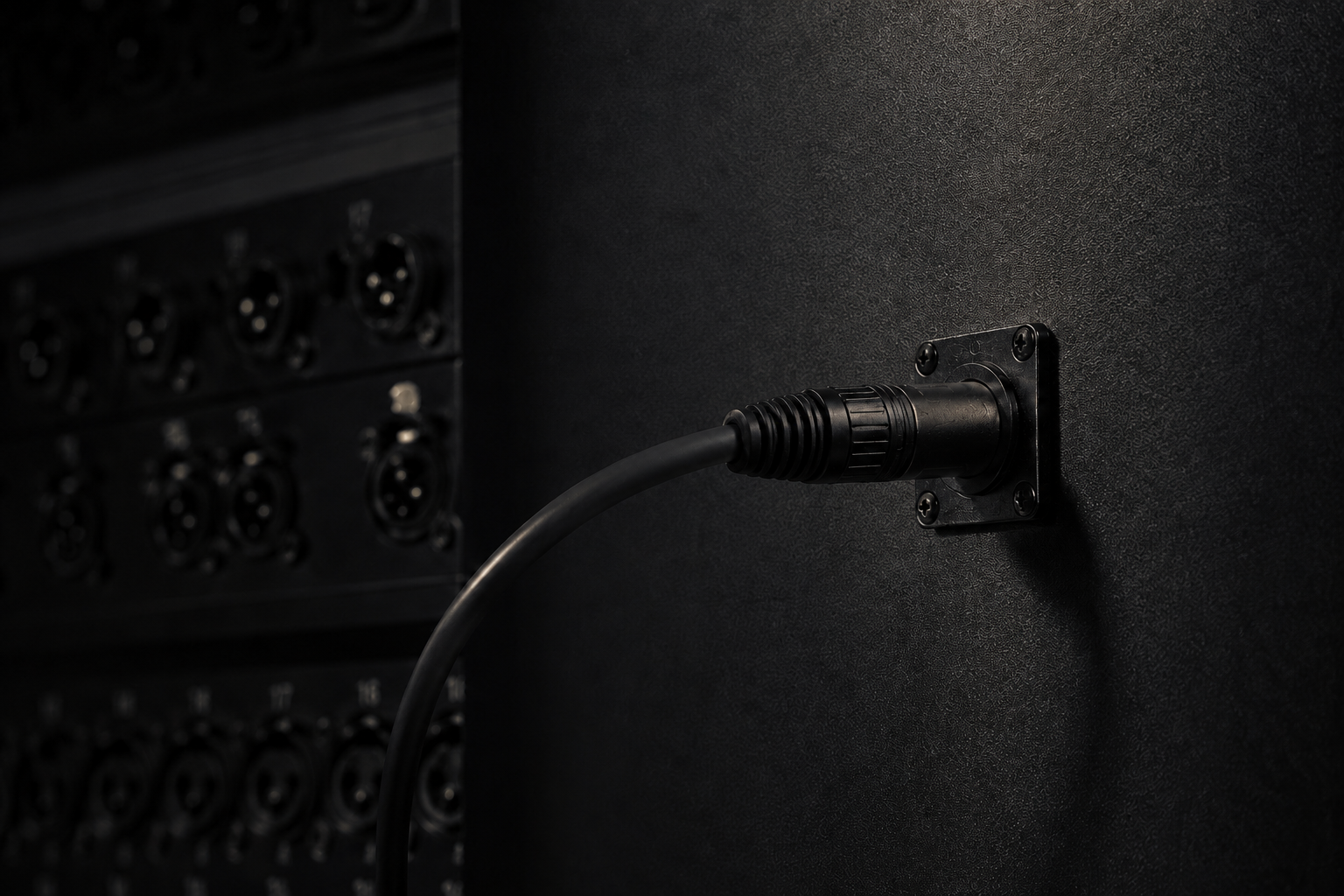
The networked portion of that infrastructure can be monitored, managed and updated remotely. The physical cable inside the wall, under the raised floor, or behind the rack cannot. It will be there, performing in conditions it was never explicitly tested for, for the next ten years.
In that context, the material decision made at the specification stage is not a secondary consideration. The choice between OFC and standard copper, between a Neutrik connector and a generic alternative, between installation-rated insulation and touring-spec construction — that decision will define system performance for the life of the installation.
The 18-month signal
The average time between a permanent AV installation and the first signal integrity complaint is approximately 18 months. Not because something breaks dramatically. Because something degrades quietly — conductor oxidation under thermal cycling, contact resistance rising at a connector that was crimped slightly off-specification, insulation fatigue at a tight bend point.
None of these are visible on day one. All of them are preventable at the specification stage.
How we build for the last meter
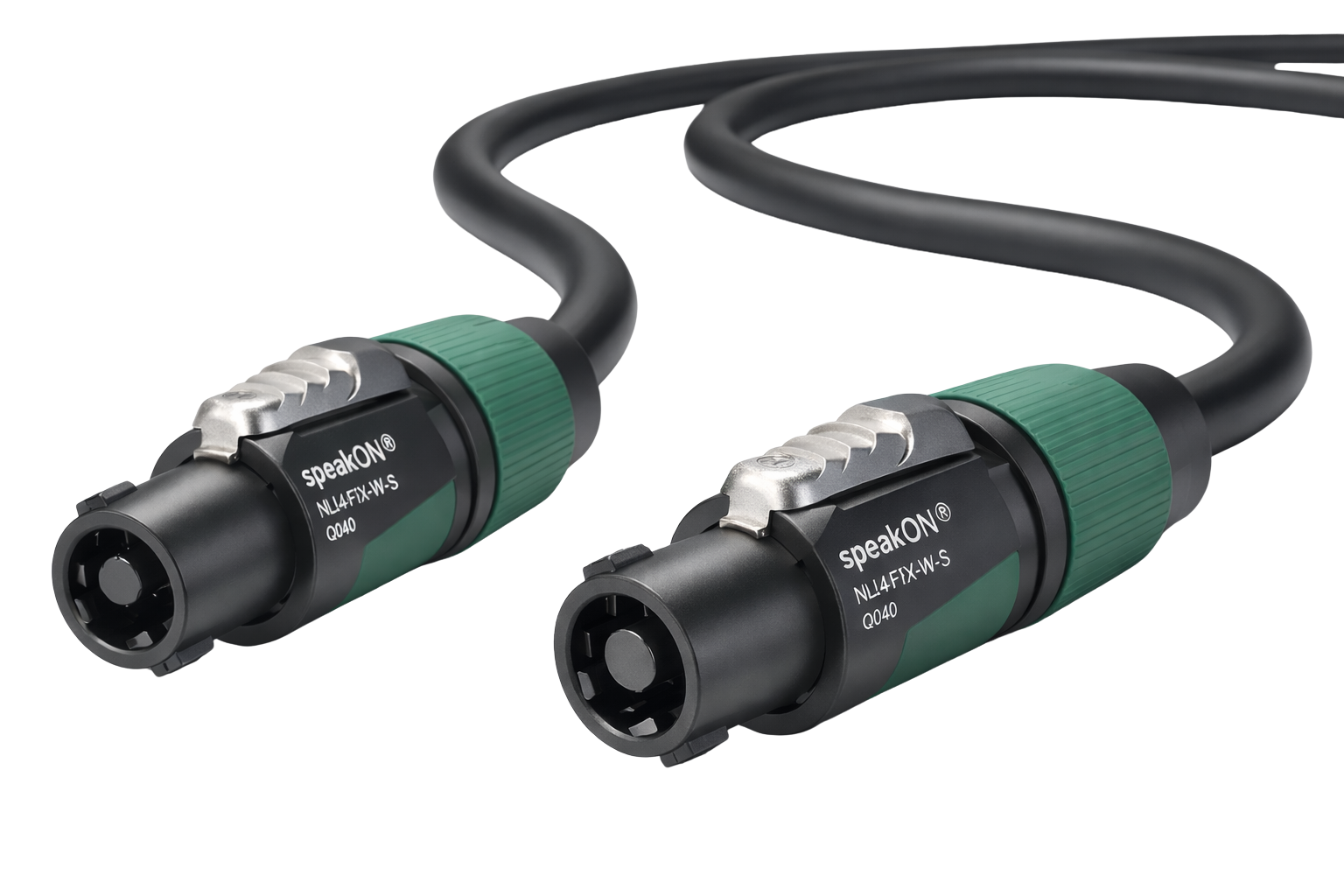
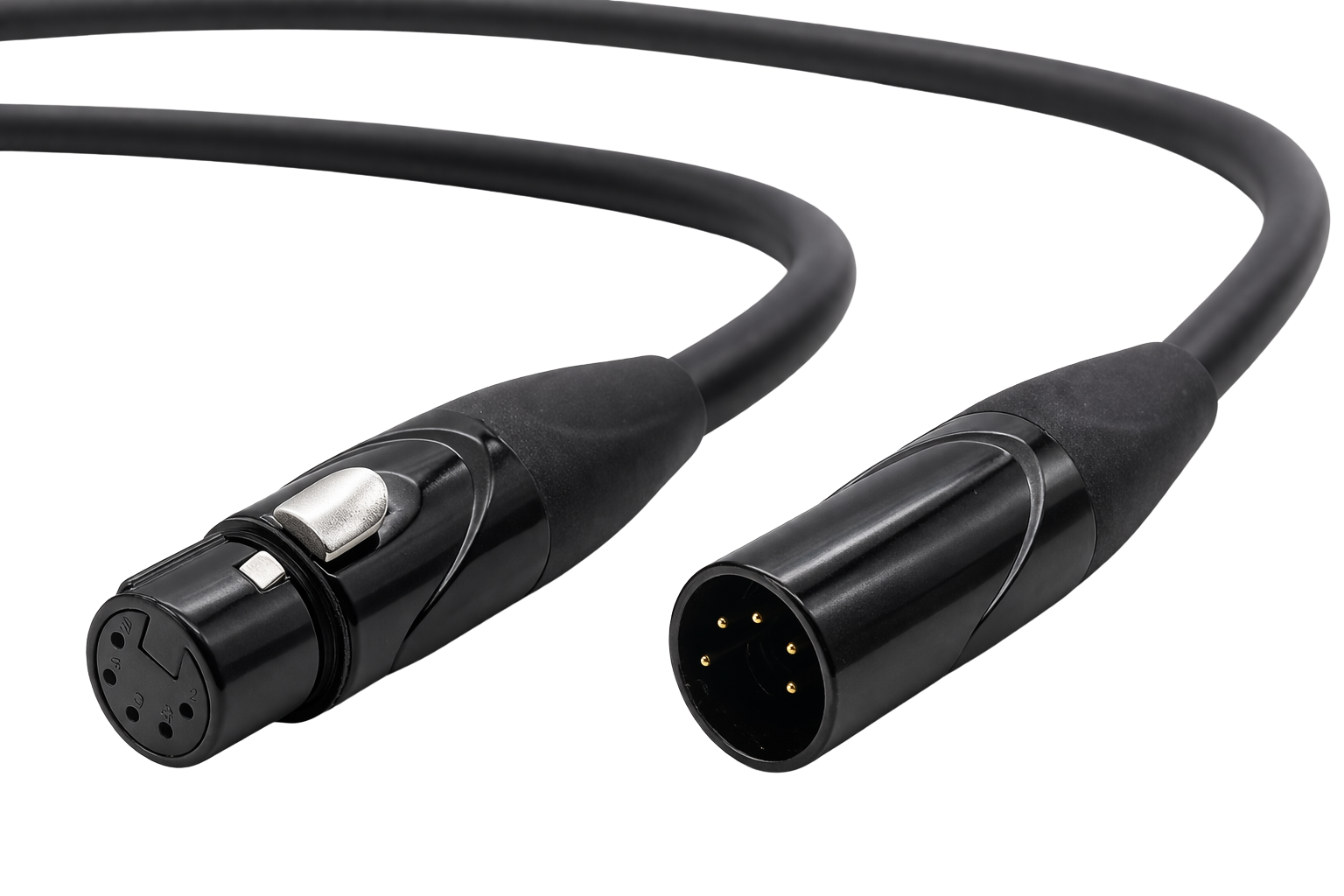
ASHER cables for permanent installation are built around the specific demands of environments where the cable cannot be reached after installation day:
– Italian OFC conductors at 99.99% purity: significantly lower oxidation rate over time compared to standard copper, which matters at the 18-month mark, the 3-year mark, and the 5-year mark
– Low-smoke, high-flexibility insulation rated for static routing in walls, conduit and floor voids
– Neutrik connectors on the Reference series: selected for long-term contact stability, not just initial performance
– No silent specification changes: the cable you spec today is the cable that ships in 12 months
The signal does not care whether it is traveling through an IP network or an analog cable. It cares about the quality of the path at every point. We build for the points the network cannot reach.
Installation / AV range → ashercables.com/collections/installation-av
Reference series → ashercables.com/collections/reference
→ Next article: 18 Months — the number that does not appear in any cable brochure

Leave a comment
This site is protected by hCaptcha and the hCaptcha Privacy Policy and Terms of Service apply.