

18 Months: The Number That Does Not Appear in Any Cable Brochure
Technical · 5 min read · Category: Installation & Specification
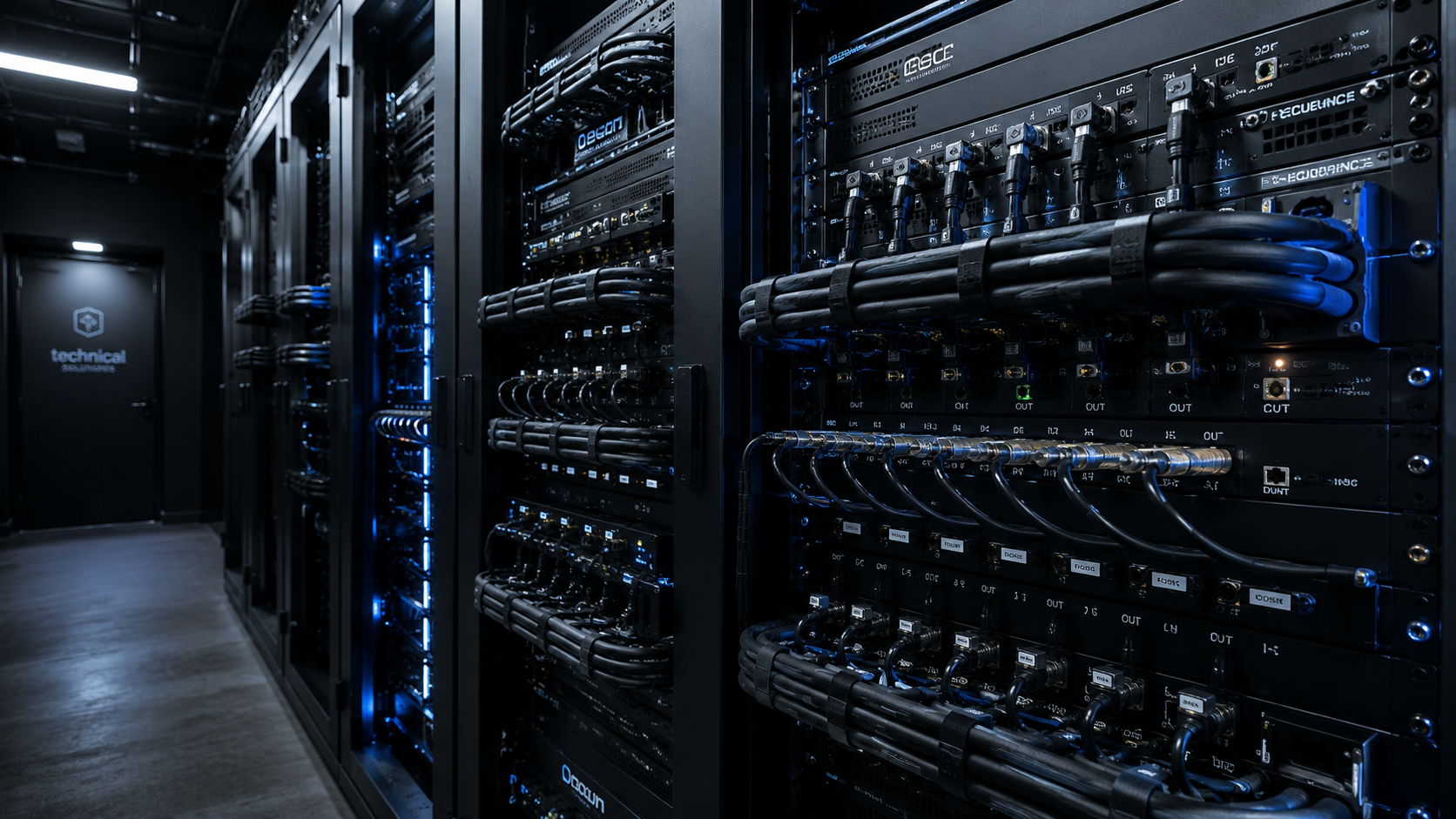
Permanent installations are the hardest test a cable will ever face. They go in once, into environments they were never explicitly tested for — inside walls, under raised floors, behind racks, inside ceiling voids — and they are expected to perform without intervention for the life of the installation.
No one checks them after day one. No one pulls them to inspect the conductor. No one re-terminates the connectors at the 12-month mark. They are there. They are expected to work.
The 18-month figure is not an industry-published statistic. It is the pattern we have observed in conversations with system integrators and AV contractors across multiple installation types. The first signal integrity complaint — intermittent dropout, rising noise floor, channel gone silent — arrives between 12 and 24 months. Almost always for the same reasons.
What actually causes it
The failure modes in permanent installation are consistent. None of them are dramatic. All of them are slow.
Conductor oxidation under thermal cycling
A cable installed inside a wall experiences daily thermal cycling: the building heats during the day and cools at night. Over 18 months, that represents approximately 500 thermal cycles. Standard copper conductors expand and contract with each cycle. At the microscopic level, that movement accelerates oxidation at impurity sites in the conductor — and standard copper has significantly more of those than OFC.
The result: rising electrical resistance over time, reduced signal conductivity, and eventually measurable signal degradation that presents as a noise problem or a level problem, not an obvious cable fault.
Contact resistance at the connector
Most permanent installation faults, when traced, lead not to the conductor but to the termination point. Specifically: contact resistance at the connector interface.
When a connector is crimped or soldered slightly off-specification — which is difficult to detect at installation and impossible to detect without disassembly afterward — the contact area between the conductor and the connector body is reduced. Over time, oxidation fills the micro-gap. Contact resistance rises. Signal integrity degrades.
The fault is intermittent, difficult to reproduce on demand, and requires full cable replacement to resolve. We have heard this story from installation engineers more than once.
Insulation fatigue at bend points
At tight bend points — inside conduit elbows, around rack edges, at cable entry points — standard insulation compounds develop micro-cracks under repeated thermal stress. Over time, those cracks can allow moisture ingress or increase capacitance at the bend point, both of which affect signal quality in ways that are difficult to trace without physical inspection.
The real cost
A system integrator we work with completed a mid-size conference centre installation: 14 rooms, full AV distribution, approximately 800 cable terminations. Clean job. Client was satisfied. Sign-off completed.
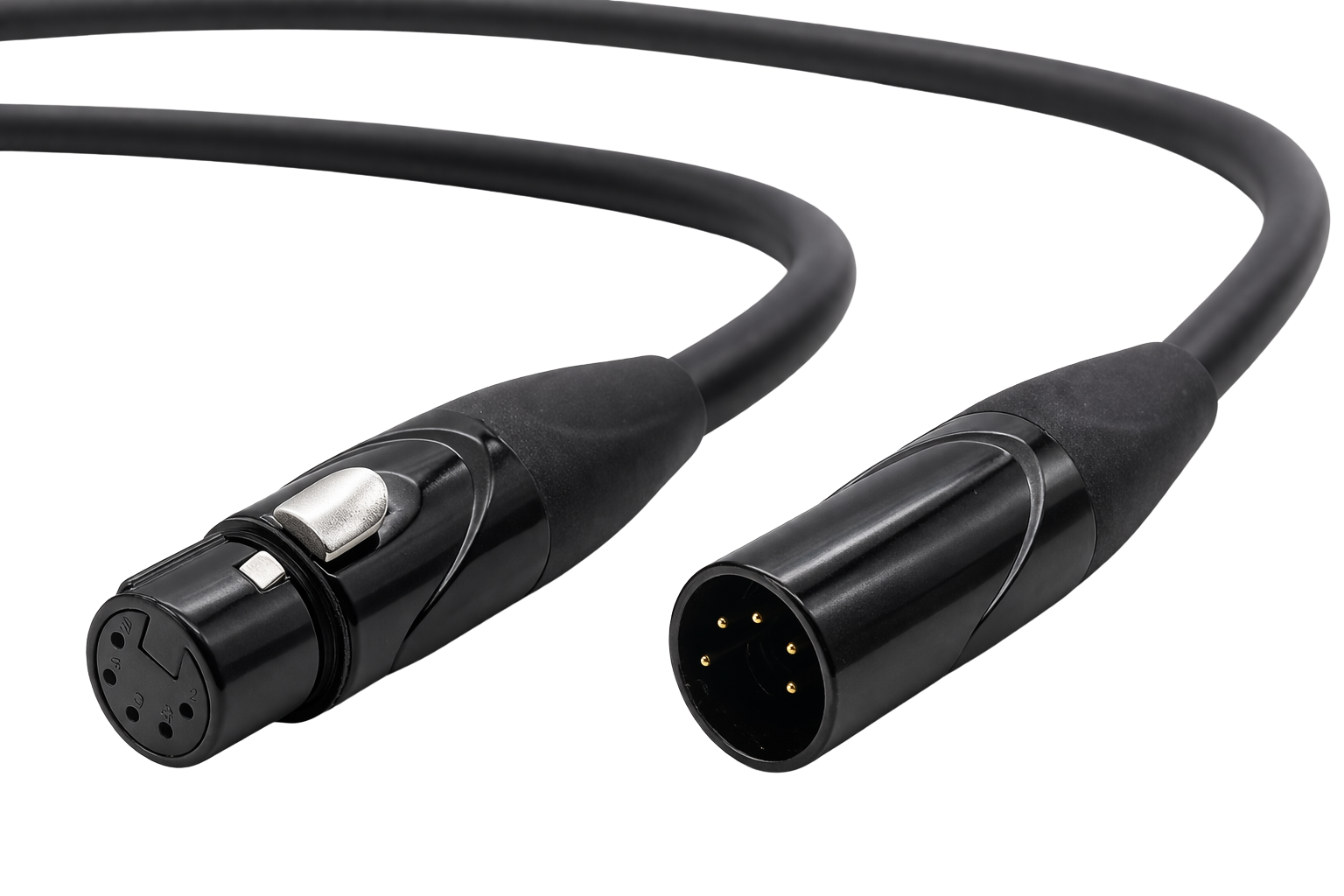
Eleven months later, one room started dropping signal intermittently. The fault was impossible to reproduce on demand — the kind that makes you question every decision you made during the installation. It eventually traced to a single XLR run, third-party cable, where the conductor had begun oxidising at a micro-crimp point inside the wall. Invisible from the outside. Untestable without full replacement.
“The cable was 40% cheaper. The callback cost me ten times that.”
The fix required two days of labour and a client conversation that nobody wanted to have. The root cause was a material decision made at the specification stage, eight months before the fault appeared.
The math of permanent installation is different from the math of a touring rig. In touring, you find the fault at soundcheck. In installation, you find it in front of a boardroom of 30 people, or during a live broadcast, or at the opening night of a venue.
The cable that costs less to purchase does not cost less to maintain.
What the specification decision actually determines
Every specification decision made before an installation is a prediction about long-term performance. The question is not whether a cable will perform on day one — almost any cable will. The question is whether it will perform at the 18-month mark, the 3-year mark, the 5-year mark.
The variables that determine that answer are fixed at the specification stage:
-
Conductor purity: OFC at 99.99% oxidises significantly more slowly than standard copper. The impurity reduction is directly proportional to long-term resistance stability.
-
Connector selection: a connector specified for long-term contact stability under real-world conditions will maintain that contact. A connector specified for initial performance at minimum cost will not.
-
Insulation specification: low-smoke, high-flexibility insulation rated for static installation environments will resist thermal fatigue over years. Touring-spec insulation designed for repeated coiling will not.
What we build into every ASHER cable for permanent installation
These are not marketing claims. They are material specifications with measurable consequences over the life of an installation.
-
Italian OFC conductors at 99.99% purity: the lowest commercially available oxidation rate, verified at the production stage
-
Low-smoke, high-flexibility insulation rated for static routing: engineered for the actual environment of a permanent installation, not for a lab test
-
Neutrik connectors on the Reference series: specified for long-term contact stability, soldered and crimped to consistent standards
-
No silent specification changes: the cable you spec today ships with the same specification in 12 months
The cable inside the wall you cannot open for five years is exactly the cable that cannot fail.
We build for that.
Installation / AV range → ashercables.com/collections/installation-av
The ASHER Promise — our specification policy → ashercables.com/pages/the-asher-promise

Leave a comment
This site is protected by hCaptcha and the hCaptcha Privacy Policy and Terms of Service apply.