

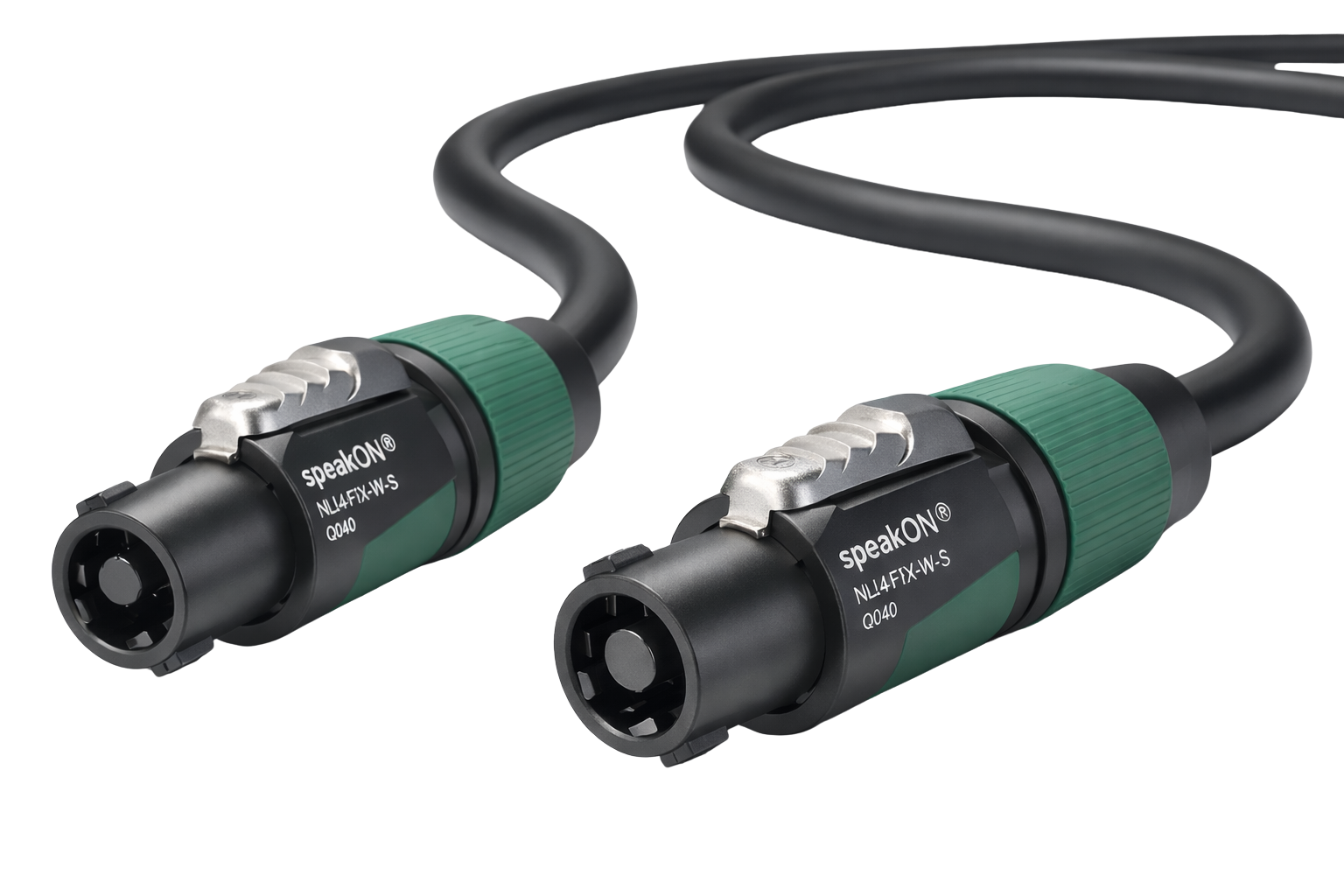
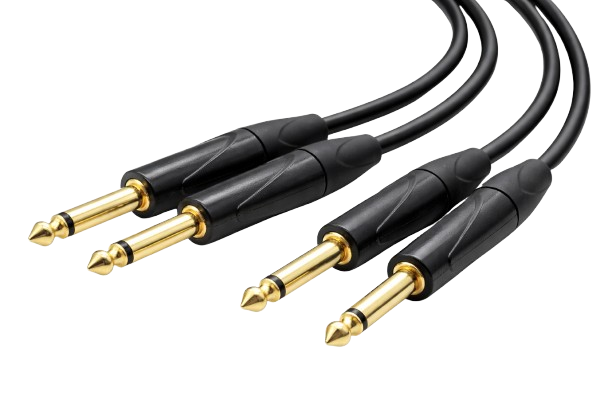
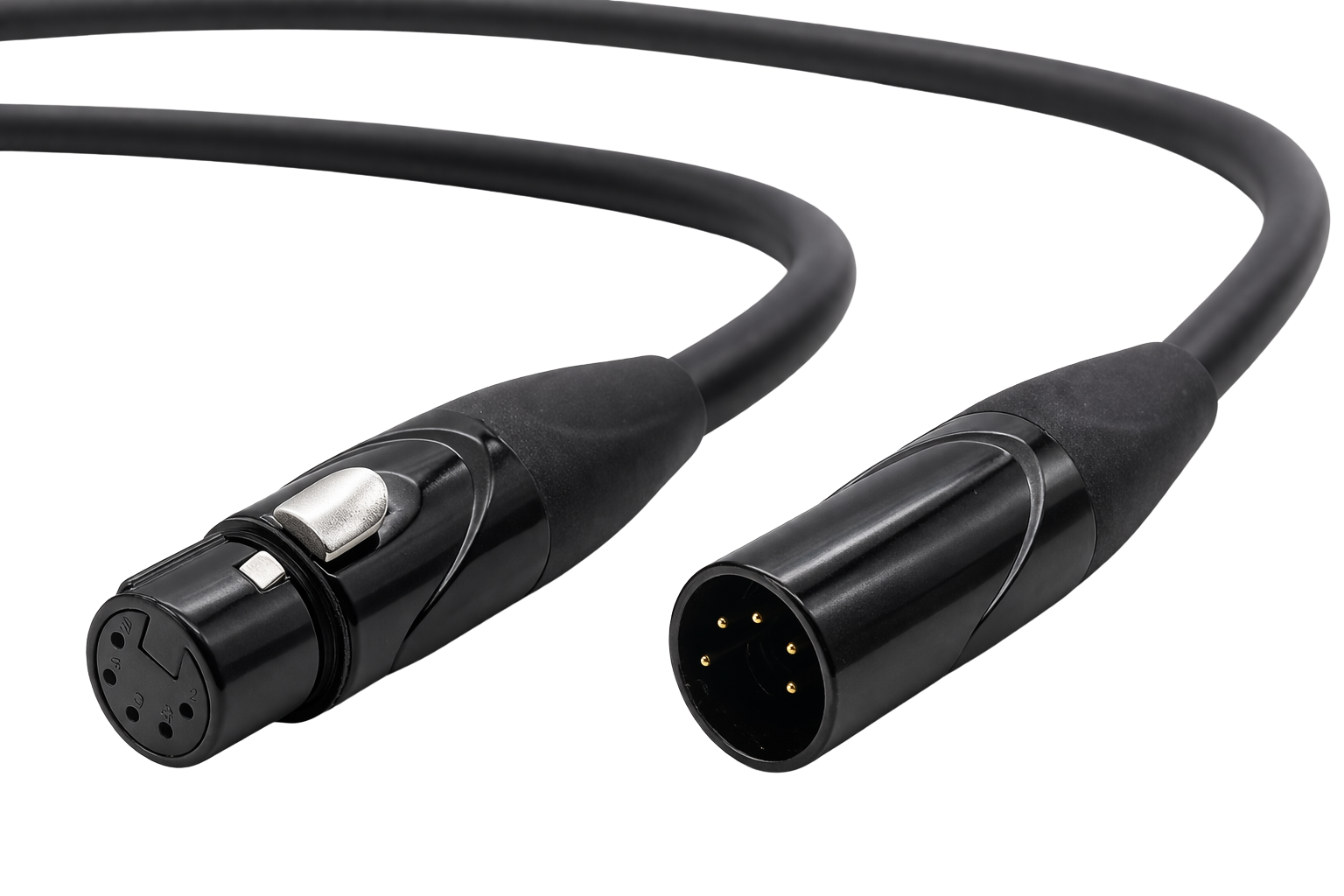
Article: The Connector Is the Weakest Point. Unless You Choose Right.
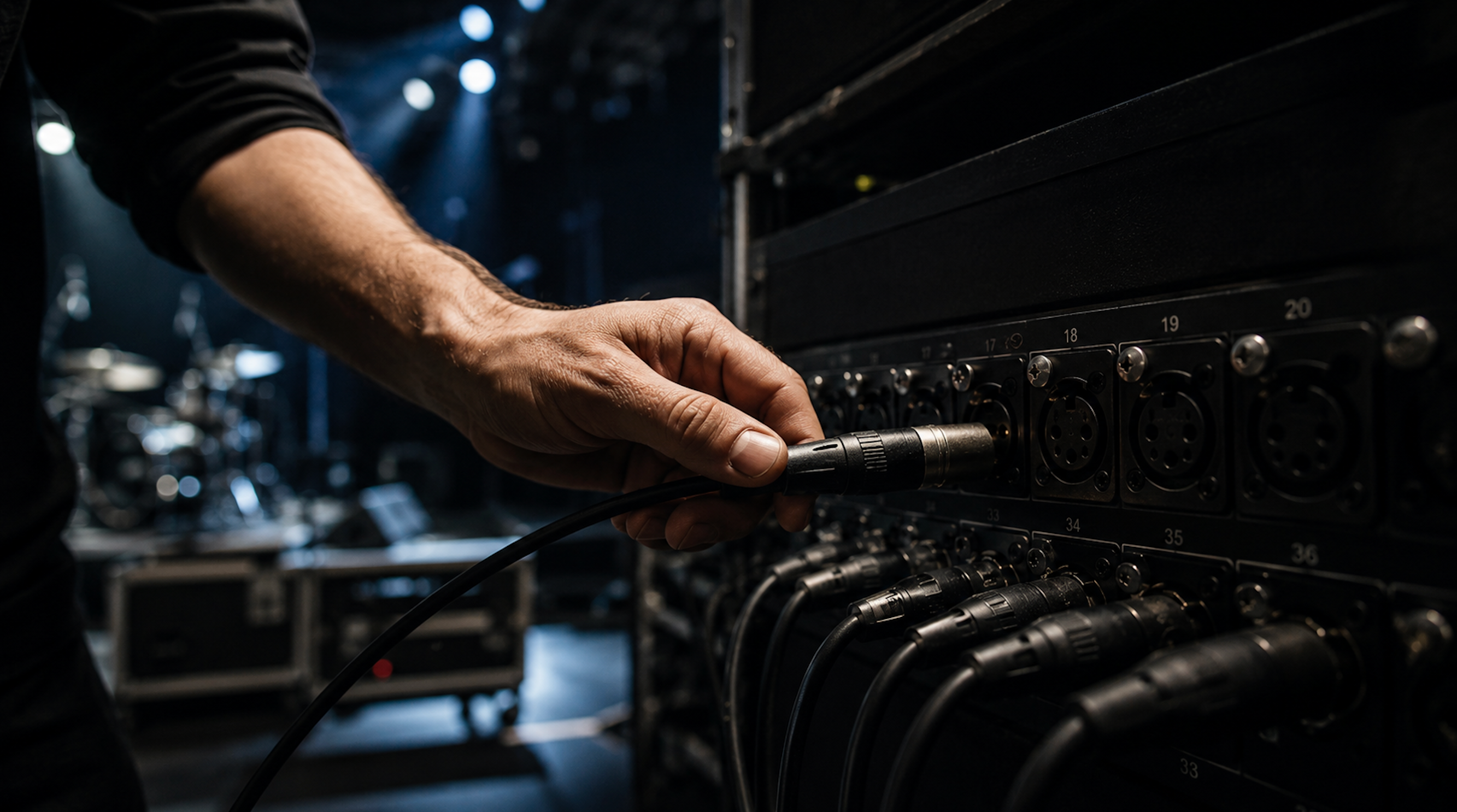
The Connector Is the Weakest Point. Unless You Choose Right.
Speak to the technicians who troubleshoot professional audio systems every day, and you’ll hear the same answer: not inside the conductor, but at the connector.
Yet when most cable manufacturers talk about quality, they focus almost exclusively on the conductor. OFC purity. Shielding coverage. Capacitance per metre. All of these matter. But the connector is where the signal actually leaves the cable and enters the audio chain.
If that interface is not built correctly, everything before it is irrelevant.
Why the connector is the critical variable
The connector is the only part of a cable that experiences three types of stress simultaneously and continuously:
-
Mechanical stress: plug/unplug cycles, cable pull at the entry point, torsion from routing
-
Chemical stress: atmospheric oxidation at the contact surface, accelerated by humidity and temperature variation
-
Electrical stress: signal passing through a contact area that degrades over time
A conductor protected by insulation and shielding is relatively stable. A connector exposed to all three simultaneously is not. The quality of the connector — the contact material, the plating specification, the mechanical construction of the locking mechanism, the quality of the strain relief — determines how long that interface remains clean and stable.
A cable with a perfect conductor and a poor connector is a cable whose most likely point of failure is the connector.
The decision we made
We chose Neutrik. We will keep choosing Neutrik.
We revisit that decision every time a lower-cost alternative is proposed. So far, every evaluation has led to the same conclusion.
Contact geometry and material
The XLR contact geometry is engineered to maintain consistent contact force over thousands of plug/unplug cycles. The contact plating is not cosmetic. Its material and thickness directly influence oxidation resistance and long-term contact stability.
A cheaper connector uses thinner plating, smaller contact area, or both. The difference is not visible on day one. It becomes visible after thousands of insertion cycles.
The connector doesn’t fail because it looks different. It fails because it behaves differently after thousands of real-world cycles.
The OFC table: where the conductor fits in
For completeness — because the connector is not the only decision — here is how Italian OFC compares to the alternatives at the conductor level. The connector and the conductor are both critical. Both need to be specified correctly for the cable to perform over its full service life.
|
Italian OFC — ASHER |
Standard OFC |
Standard Copper |
|
|
Purity |
99.99% |
99.95% |
~99.9% |
|
Oxidation resistance |
Excellent |
Good |
Moderate |
|
Signal conductivity |
Maximum |
High |
Standard |
|
Flexibility under stress |
High |
High |
Medium |
|
Long-term stability |
Year 5+ |
Year 3–4 |
Year 1–2 |
|
Ideal use |
Installation · Touring · Studio |
Studio · Light touring |
Budget / temporary |
→ Conductor quality alone cannot compensate for poor connector performance. Both elements determine long-term reliability.
The principle behind every ASHER production decision
Every decision in the ASHER production process starts from the same question: what will this component look like in the field, in real conditions, three years from now?
The signal does not forgive weak components. We build to make sure the connector is never the weak one.


Leave a comment
This site is protected by hCaptcha and the hCaptcha Privacy Policy and Terms of Service apply.